
Oaxaca, Mexico
A high-desert valley city where mole simmers for hours, mezcal is a way of life, and Zapotec history rises out of the mountains.
Oaxaca de Juárez is the cultural heart of southern Mexico, prized for its Spanish-colonial center, extraordinary food scene, and deep Indigenous roots that still shape daily life through markets, textiles, and craft traditions. It's a city built for wandering — courtyards, church bells, and the smell of toasted chiles and hot chocolate around every corner — with the ancient hilltop ruins of Monte Albán and mezcal-producing villages just beyond the edge of town.
Don't miss
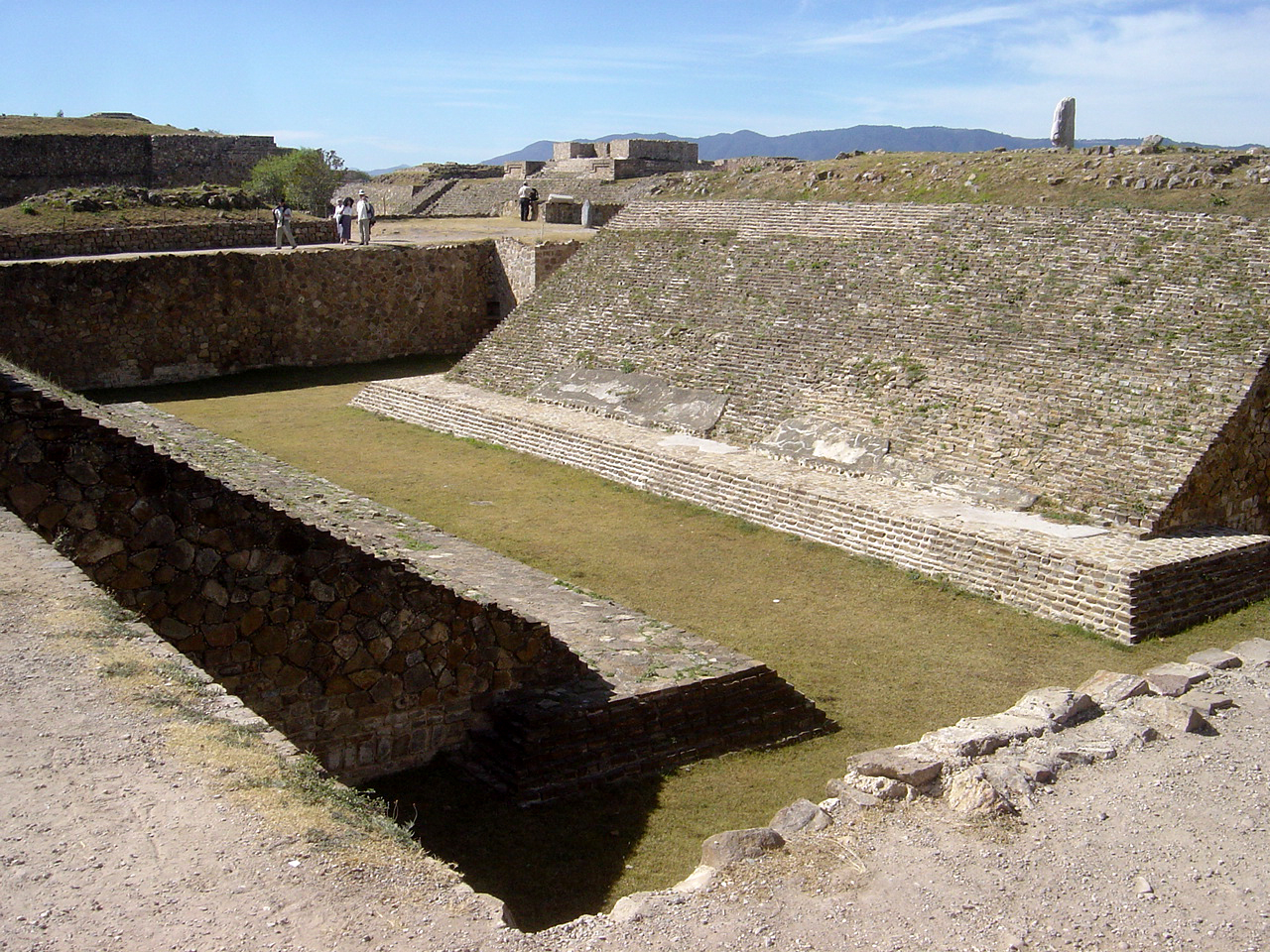
 Monte Albán — A vast Zapotec archaeological city perched on a leveled mountaintop with sweeping views over the three valleys below.
- Santo Domingo de Guzmán Church & Cultural Center — A gold-leafed baroque church-turned-museum complex whose ex-convent gardens showcase the region's botanical and cultural history.
- Mercado Benito Juárez & Mercado 20 de Noviembre — Twin downtown markets where you can eat your way through tlayudas, quesillo, and smoky chapulines shoulder-to-shoulder with locals.
- Mezcal villages of the Central Valleys — Small-batch palenques in towns like Santiago Matatlán let you taste mezcal straight from the still, often explained by the families who make it.
 Hierve el Agua — Mineral-rich pools perched atop calcified 'frozen waterfalls' offer a surreal swim with valley views stretching for miles.
Photo: The original uploader was Lavintzin at English Wikipedia. — CC BY-SA 2.5
 Teotitlán del Valle — A Zapotec weaving village where natural dyes — cochineal red, indigo blue — still color hand-loomed wool rugs.
Photo: Gibrán Aquino — CC BY 2.5
Getting around
The historic center is compact and best explored on foot, with the zócalo as an easy reference point for wandering between churches, markets, and cafés. For day trips to Monte Albán, Hierve el Agua, or the mezcal villages, colectivo vans, organized tours, and private drivers are all common and inexpensive ways to cover longer distances; taxis are plentiful within the city itself.
Food and drink
Oaxaca is often called Mexico's culinary capital, and the reputation is earned: expect deep, complex moles (negro, coloradito, verde), tlayudas cooked over charcoal, quesillo (Oaxacan string cheese), and mezcal poured in small clay cups called copitas rather than shot back like tequila. Sit-down comedores inside the markets are often as memorable as formal restaurants, and chocolate — ground fresh with almonds and cinnamon — turns up in both sweet drinks and savory mole.
Neighborhoods and areas
The Centro Histórico around the zócalo and Santo Domingo holds the cathedral, museums, and most first-time-visitor sights. Jalatlaco and Xochimilco are quieter, cobblestoned neighborhoods known for colorful facades, small galleries, and mezcalerías with a more local feel. Beyond the city, the Central Valleys unfold into distinct crafts villages — weaving, black pottery, alebrije carving — each historically specializing in a different tradition.
When to go
Late October into November draws visitors for Día de los Muertos, when cemeteries, home altars, and parades fill the city with marigolds and candlelight, though it's also the busiest and highest-priced stretch of the year. The dry season (roughly November through April) offers the most reliable weather for exploring ruins and villages, while the summer rainy season keeps the surrounding hills a vivid green.
A sample keepsake
This is the kind of trip story Voyagekit writes for you afterward — from your real trip.
A Week Among Mole, Mezcal, and Mountains
The following is an illustrative sample itinerary — a composite of the kind of week many travelers piece together in and around Oaxaca City.

Settling into the Centro
We arrived in the late afternoon and did nothing more ambitious than walk to the zócalo, order a coffee, and watch the square come alive with balloon sellers and marimba players. The cathedral bells marked the hour, and by the time we wandered to Santo Domingo the gold of its facade was catching the last light.
Photo: aljuarez — CC BY 2.0

Market mornings
We spent one whole morning eating our way through Mercado 20 de Noviembre, going stall to stall for tlayudas and fresh quesillo, then wandered next door for a cup of thick, cinnamon-spiced hot chocolate. It felt less like sightseeing and more like being folded into the daily rhythm of the city.
Above the valley at Monte Albán
The drive up took barely half an hour, but stepping onto the leveled plazas of Monte Albán felt like arriving somewhere entirely apart from the city below. We sat for a long while on the edge of one platform, watching clouds move shadows across the three valleys, trying to imagine the Zapotec city that once filled this mountaintop.
Photo: Bobak Ha'Eri — CC BY 2.5
Tasting mezcal in Matatlán
A short trip out to Santiago Matatlán put us in the middle of an actual palenque, where a family walked us through roasted agave hearts, a stone mill turned by a patient horse, and finally a few sips of mezcal so different from anything bottled that it changed how we thought about the spirit entirely.
Photo: Prsjl — CC BY-SA 4.0

Swimming above the clouds at Hierve el Agua
Our last full day was the quietest and strangest: floating in mineral pools at the lip of a stone 'waterfall' that never actually falls, the whole valley spread out below us. We stayed until the light went gold, reluctant to head back down the mountain toward the city and our flight home.
Photo: KTDrasky — CC BY 2.0
Voyagekit turns your trip into a keepsake like this — plan yours, free.
Good to know
How many days do you need in Oaxaca?
Most travelers spend 4–6 days: enough for a couple of days in the city center and markets, plus day trips to Monte Albán, a mezcal village, and Hierve el Agua.
When is the best time to visit Oaxaca?
The dry season from roughly November through April brings the most consistent weather; late October/early November is magical for Día de los Muertos but also the most crowded and expensive time to visit.
Is Oaxaca worth visiting?
Yes — it's widely regarded as one of Mexico's richest destinations for food, craft traditions, and living Indigenous culture, with a walkable historic center and easy access to archaeological sites and artisan villages.
Is Oaxaca safe for tourists?
The city and its popular tourist areas are generally considered safe for visitors who take normal precautions, though as always it's worth checking current government travel advisories and local guidance before you go, especially for road travel at night.
Do I need to speak Spanish in Oaxaca?
Basic Spanish is very helpful, especially in markets and villages outside the city, though many restaurants and hotels catering to tourists in the historic center have some English support.
What's the best way to try mezcal in Oaxaca?
Beyond mezcalerías in town, visiting a palenque (small-scale distillery) in the Central Valleys lets you see the agave roasting and distillation process firsthand and taste varieties you won't find bottled elsewhere.
Get early access to Voyagekit.
We use your email only to reach you about early access — see our Privacy Policy.