
Oaxaca, Mexico
Mexico's soulful heart of mezcal, mole, and living Zapotec tradition.
Oaxaca de Juárez is a highland city in southern Mexico renowned for its extraordinary food scene, vibrant indigenous culture, and colonial architecture built from warm green cantera stone. It's a place where ancient ruins, market stalls piled with mole pastes and chapulines, and mezcal palenques all sit within easy reach of a walkable, arts-filled city center.
Don't miss
- Zócalo and Santo Domingo Church — The city's shaded main square and the gilded, museum-attached former monastery anchor the historic center.
 Monte Albán — A dramatic hilltop archaeological site where the ancient Zapotecs leveled a mountaintop to build their capital.
- Mercado Benito Juárez & 20 de Noviembre — Sprawling covered markets where you can eat your way through moles, tlayudas, and smoky meats grilled at the passageway known as the Pasillo de Humo.
- Mezcal palenques and tasting rooms — Small-batch distilleries around the valley let you sip agave spirits still made using centuries-old traditions.
 Hierve el Agua — Mineral-rich springs have formed petrified waterfall formations over a dramatic valley viewpoint outside the city.
Photo: The original uploader was Lavintzin at English Wikipedia. — CC BY-SA 2.5
- Teotitlán del Valle and Alebrije villages — Nearby weaving and wood-carving villages produce naturally dyed rugs and brightly painted fantastical creatures.
Neighborhoods and layout
The historic Centro, organized around the Zócalo and Santo Domingo, is where most visitors base themselves, with cobblestone streets lined in colonial buildings now housing galleries, cafés, and boutique hotels. Jalatlaco and Xochimilco are quieter, colorful residential barrios just a short walk from the center, known for their painted facades and neighborhood-feel restaurants. Beyond the city, the Central Valleys spread out toward villages each specializing in a craft — pottery, textiles, mezcal — making day trips a core part of any visit.
When to go
Oaxaca has a mild highland climate year-round, but the Day of the Dead period in late October through early November is the most famous and crowded time to visit, with elaborate altars, comparsas, and cemetery vigils. The dry winter months are pleasant for sightseeing and day trips, while summer brings afternoon rains that green up the valley. Guelaguetza, a major festival of regional dance and music held in summer, is another peak, high-demand period worth planning far ahead for.
Food and drink
Oaxaca is considered one of Mexico's great culinary capitals, famous for its many moles, tlayudas (large crisped tortillas piled with toppings), fresh quesillo cheese, and chapulines (toasted grasshoppers) sold by the cupful in the markets. Mezcal, not tequila, is the local spirit of choice, and sampling it at a small mezcalería or out at a palenque is considered essential. Market eating — assembling a meal from different stalls at Mercado 20 de Noviembre or the Sunday Tlacolula market — is as memorable as any sit-down restaurant.
Getting around
The historic center is compact and best explored on foot. For day trips to Monte Albán, Hierve el Agua, or the craft villages, collective vans, tourist shuttles, or hired taxis/drivers are the most common options, since public bus routes to these sites can be infrequent. Renting a car is possible for those wanting a flexible valley-loop itinerary, but many travelers find organized or shared transport simpler given winding mountain roads.
Local character
Oaxaca carries a strong sense of indigenous identity, with Zapotec and Mixtec languages, textile techniques, and culinary traditions still very much alive rather than folkloric performance. Family workshops passed down through generations produce the region's textiles, black pottery, and alebrijes, and much of the city's rhythm follows a calendar of saints' festivals, guelaguetza traditions of communal reciprocity, and market days in surrounding towns.
A sample keepsake
This is the kind of trip story Voyagekit writes for you afterward — from your real trip.
A Week Among Moles and Mountains
This is an illustrative sample itinerary for a first trip to Oaxaca, following a loose, generic traveler through the city and its valley over the course of about a week.

Settling into the Centro
We arrived in the late afternoon and did nothing more ambitious than wander toward the Zócalo, letting the smell of roasting coffee and the sound of marimba buskers pull us along. Santo Domingo's facade caught the last light like it was lit from within, and we ended the night at a rooftop with a view over the church, mezcal in hand, still travel-dazed but immediately smitten.
Photo: The original uploader was Bobak at English Wikipedia. — CC BY-SA 2.5

Eating our way through the market
The next morning we went straight for Mercado 20 de Noviembre, where the Pasillo de Humo was already smoky with grilling meats by mid-morning. We picked our cuts, had them weighed and grilled, and ate at a communal table with fresh tortillas, salsas, and a cup of chapulines we were dared into trying by the vendor. It set the tone: in Oaxaca, some of the best meals happen standing up in a market aisle.
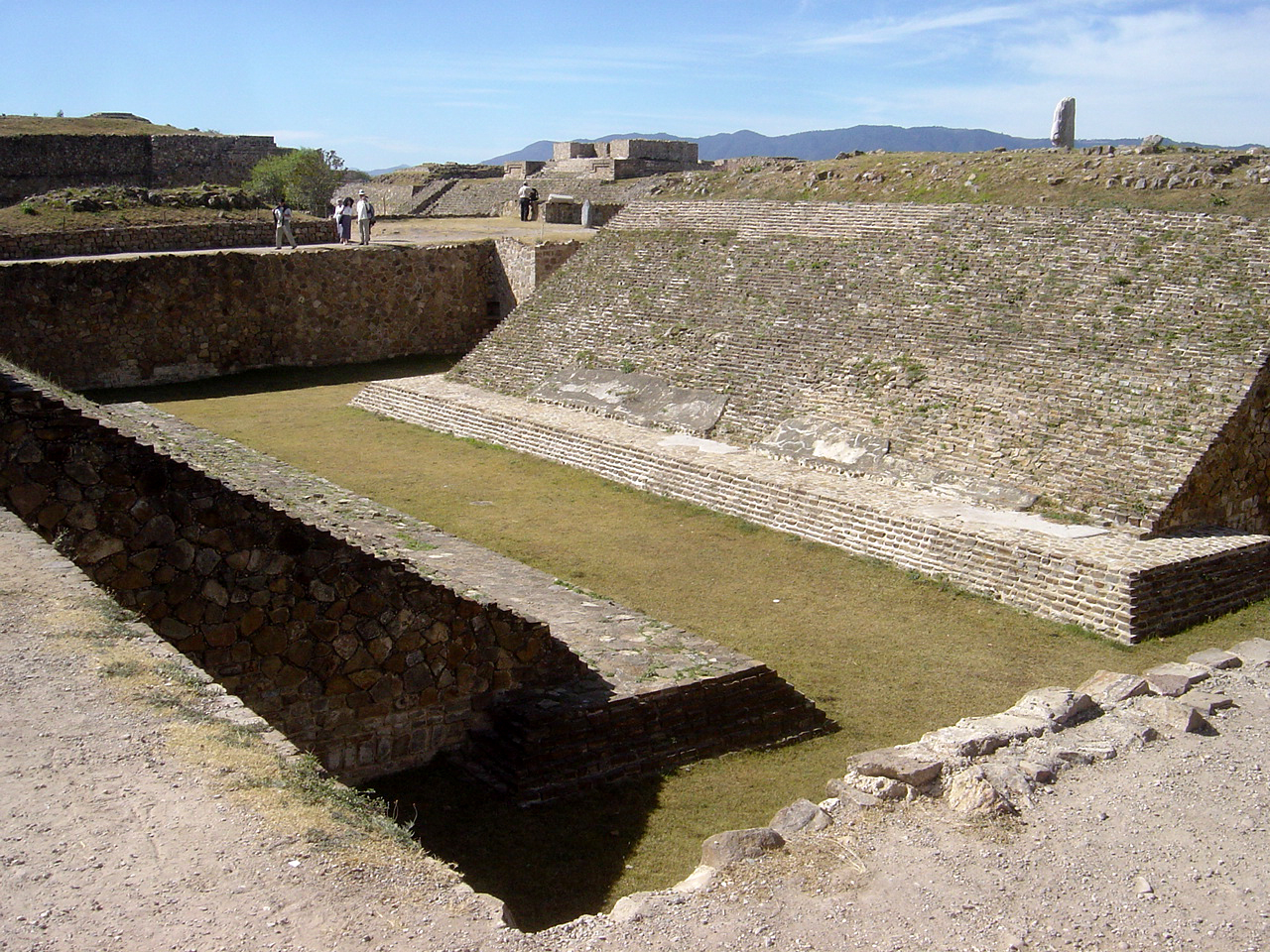
Sunrise over Monte Albán
We hired a driver early to beat the heat and the crowds at Monte Albán, and had the ball court and central plazas nearly to ourselves as the mist burned off the valley below. Standing on the leveled mountaintop, it was hard not to feel the scale of what the Zapotecs had built centuries ago — a whole capital carved into a peak with views in every direction.
Photo: Bobak Ha'Eri — CC BY 2.5

Petrified waterfalls at Hierve el Agua
A day trip out to Hierve el Agua turned into an unplanned highlight, floating in the mineral pools at the cliff edge while looking out over the valley the stone 'waterfalls' spill toward. We stopped on the way back in Teotitlán del Valle, where a weaving family walked us through their natural dye process — cochineal reds, indigo blues — before we left with a small rug we still think about.
Photo: KTDrasky — CC BY 2.0

A last mezcal at dusk
On our final evening we found a small mezcalería just off the Zócalo and let the bartender guide us through a flight, from smoky espadín to something rarer and wilder tasting. Sitting there as the church bells rang across the square, it felt like the whole trip — market smoke, mountain ruins, dye-stained hands — had distilled into that one glass.
Photo: No machine-readable author provided. João Sousa assumed (based on copyright claims). — CC BY-SA 3.0
Voyagekit turns your trip into a keepsake like this — plan yours, free.
Good to know
How many days do you need in Oaxaca?
Most travelers spend 4–6 days: two or three for the city's markets, museums, and food, and a few more for day trips to Monte Albán, Hierve el Agua, and craft villages in the valley.
When is the best time to visit Oaxaca?
The dry season from roughly October through April offers the most comfortable weather for walking and day trips, with Day of the Dead (late Oct/early Nov) and Guelaguetza (summer) as the two big cultural draws — though both bring larger crowds and higher demand for lodging.
Is Oaxaca worth visiting?
Yes — it's widely regarded as one of Mexico's richest destinations for food, crafts, and living indigenous culture, with a walkable, architecturally beautiful center and easy access to remarkable ruins and villages.
Is Oaxaca safe for tourists?
Oaxaca city and its main tourist areas are generally considered safe and welcoming, with the usual big-city precautions around belongings and unlit streets at night; as with any travel in Mexico, it's worth checking current official travel advisories for the state before you go.
Do you need to speak Spanish to visit Oaxaca?
Basic Spanish helps outside hotels and tourist-oriented restaurants, especially in markets and villages, but many people in the tourism sector speak some English; learning a few phrases goes a long way and is appreciated.
What's the difference between mezcal and tequila, and should I do a mezcal tour in Oaxaca?
Tequila is a type of mezcal made only from blue agave, mainly around Jalisco, while Oaxacan mezcal is typically made from varied agave species using traditional roasting and distilling methods; visiting a palenque or tasting room near the city is one of the most distinctive things to do here.
Get early access to Voyagekit.
We use your email only to reach you about early access — see our Privacy Policy.